Roofing debris removal vs dumpster rental depends on project size, work time, site space, and waste type. A hauling crew takes away tear-off waste after the work. A dumpster stays on site while workers load it. Small, fast jobs often suit hauling, while longer projects may need a container.
Table of Contents
- What Is the Difference Between Roofing Debris Removal and Dumpster Rental?
- When Does Roofing Debris Removal Make More Sense?
- When Is a Dumpster Rental the Better Choice?
- How Do Roofing Debris Removal and Dumpster Rental Compare in Cost?
- What Roofing Materials Can Each Option Accept?
- Which Option Is Safer and More Convenient for a Job Site?
- How Do You Choose the Right Roofing Cleanup Option?
- Frequently Asked Questions
What Is the Difference Between Roofing Debris Removal and Dumpster Rental?
Roofing debris removal uses a crew and truck to collect waste after roofing work. Dumpster rental gives workers a container that stays at the property. Both choices can handle common tear-off waste. They fit different work plans and site needs.
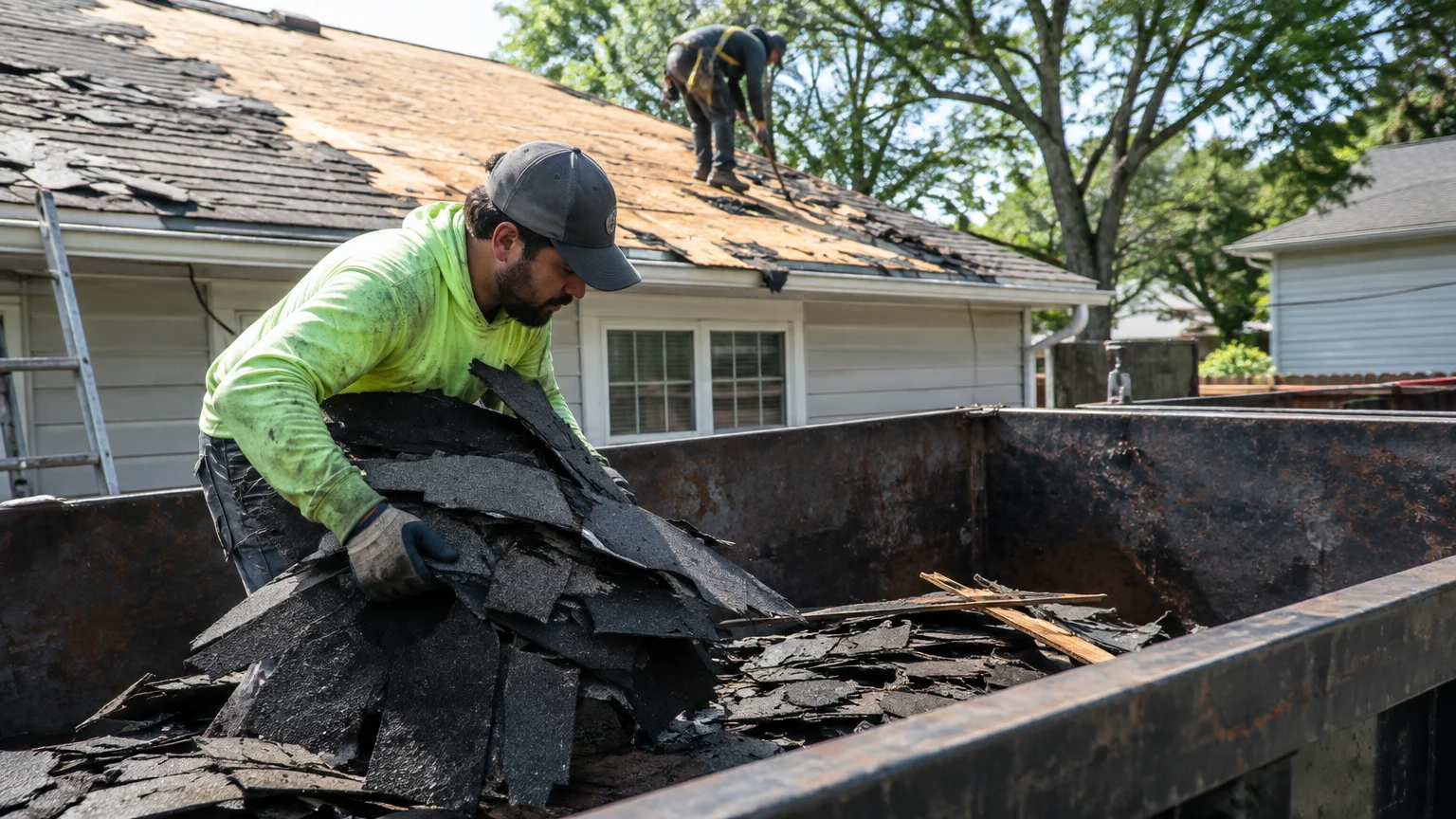
Roofing debris may include asphalt shingles, underlayment, felt paper, flashing, damaged wood, nails, and small roof deck pieces. Underlayment is the layer under the shingles. It helps protect the roof from water. Roof crews must contain these items to protect people, cars, and nearby property.
With removal service, the crew arrives and loads the debris. The crew then sweeps the work area and hauls the load away. This can help finish the site without leaving a container in the driveway. It also helps homeowners who want paths and yards cleared soon after the roof work ends.
A dumpster works in another way. The container stays at the property for a planned time. Workers add debris as each part of the project moves forward. This can suit a large roof replacement, several buildings, or a remodel that creates waste over many days.
The main difference is timing. Removal happens at a planned collection. A dumpster supports loading over time. Conroe TX Junk Removal can help Conroe property owners compare both choices. The right choice depends on access, waste volume, and the planned finish date.
How each option handles shingles, underlayment, and tear-off waste
Most common roofing waste may go into either option. The provider must approve the materials first. Heavy loads, mixed waste, and regulated items may need special steps. Tell the provider what the roofing crew plans to remove before service begins.
Why project size and cleanup timing matter
A small repair may create one small pile. A full tear-off can create much more waste in one short period. The best choice keeps debris off the ground. It also avoids placing a container where it does not fit.
When Does Roofing Debris Removal Make More Sense?
Roofing debris removal often works best when the job ends quickly. It can also suit a project where waste is ready for collection at one time. This choice may fit a small repair, one home replacement, or a property with little room for a container.
A hauling crew can collect the pile after the roofers finish. The driveway, lawn, and walkways do not need to hold a container for days. This may help a property manager prepare a building for tenants soon after the work ends.
On-demand hauling can limit job site problems. Workers do not need to plan around a container that blocks a garage. It may also keep a drive from becoming narrow. The crew can gather loose shingles near fences or paper beneath shrubs.
This option may help contractors who handle many short jobs. A contractor can arrange cleanup after each project. Workers do not need to move waste between sites. Good scheduling matters because collection should follow the tear-off and final sweep.
Removal service is often a strong choice when speed matters. It also suits owners who cannot place a dumpster on private land. Conroe TX Junk Removal serves homeowners, contractors, and property owners seeking local construction debris removal in the main Conroe area. This includes Downtown Conroe and April Sound, along with Willis, Montgomery, Magnolia, Cut and Shoot, and nearby communities.
Projects with limited debris or a fast cleanup deadline
Small roof repairs, shed roof replacements, and one-day tear-offs may not need a container. A pickup can remove the pile after the work ends. This leaves fewer items exposed to wind, rain, and foot traffic.
A quick pickup may also help when a business must reopen soon. Shops, offices, and rental homes may need clear access. The same basic idea applies to other cleanup jobs, including junk removal and professional furniture removal. The service should match the size and type of waste.
How on-demand hauling reduces job site disruption
A hauling crew can work after the roof crew gathers waste in one place. The property may regain normal access sooner. Before service, move parked cars and open gates near the debris pile.
Keep children, pets, and visitors away from the work area. Ask the roofing crew to keep nails and loose pieces in a stable pile. A clear pickup plan helps the hauling crew work without delays.
When Is a Dumpster Rental the Better Choice?
A dumpster may work better when roofing work lasts several days. It can also help when waste appears in stages. Workers have one place for shingles, paper, and other approved debris as each roof section comes off.
This setup can suit a large roof, several structures, or a project with siding work. It may also help with a remodel that creates construction debris. Workers do not need to build a new pile each day. One container can make the site easier to organize.
Space is an important concern. The container needs firm ground and room for delivery. Check gates, branches, utility lines, slopes, and driveway width first. The truck also needs a safe path for drop-off and pickup.
The rental time matters too. Weather, inspections, deliveries, and crew schedules may change the plan. Ask the provider what happens if the work takes longer. Also ask about fill lines, loading rules, and approved materials.
A dumpster may not fit a tight neighborhood or small driveway. It can block access or place stress on pavement. Boards may protect some surfaces, but placement details should be confirmed before delivery.
Longer renovation projects with ongoing waste
A container can support steady loading when roof work joins other building tasks. It keeps waste close to the crew during the project. The team must keep debris below the fill line. It must also keep waste away from the container doors.
If the project includes demolition debris, explain that before delivery. Demolition debris may include broken walls, old flooring, cabinets, or other removed parts. These items may have different rules from ordinary roofing waste.
Space, loading access, and rental-period considerations
The site needs safe access for delivery and pickup. Check local placement rules and community restrictions. Some properties may need permission before placing a container. These steps can help prevent delays and blocked driveways.
Keep emergency paths open. Do not place a container near low wires or weak ground. If the property is in Conroe, local street layout and narrow drives may affect the best choice.
How Do Roofing Debris Removal and Dumpster Rental Compare in Cost?
The cost of either choice depends on the work involved. There is no single answer for every roof. Important factors include waste amount, material weight, labor, access, disposal rules, travel distance, container time, and cleanup needs.
Roofing debris removal may suit a smaller pile or one-time cleanup. The service often includes gathering and loading. This can save the owner from handling those tasks alone. Scattered waste, hard access, or extra sorting may change the final quote.
A dumpster may suit waste that arrives over many days. The final cost may depend on container size, rental time, placement, and disposal needs. A container that is too small may require more work. A container that is too large may take up needed space.
Material weight also matters. Shingles are dense, and several layers can create a heavy load. Concrete or clay tiles may need different handling from asphalt shingles. Tell the provider about the roof layers and materials before the job begins.
The final cost should be confirmed in a quote after the project details are reviewed. Do not compare only the basic service. Ask what labor, access, loading, disposal, and timing needs are included.
What affects the overall cost of each option
Describe the roof size, number of layers, waste type, pile location, access path, and desired cleanup date. Photos may help the provider understand the job. A clear description leads to a more useful quote.
The final cost may also change if waste is mixed. Roofing waste, yard waste, furniture, and interior materials may follow different disposal rules. Keeping each type apart can make the plan easier to review.
How labor, disposal, material weight, and rental time compare
Removal service places more focus on crew labor and collection timing. A dumpster places more focus on container use, loading time, and disposal. Neither choice is always less costly for every roofing project.
A short repair and a full replacement should not be judged the same way. A long remodel may need steady space for waste. A small business cleanup may need fast removal instead. The work plan should guide the comparison.
What Roofing Materials Can Each Option Accept?
Both choices may accept common roofing waste. Rules vary by provider and disposal site. Ask before mixing materials. This matters when a roof has old layers, treated wood, or unusual products.
Common roofing debris may include asphalt shingles, synthetic underlayment, felt paper, flashing, ridge caps, nails, and small roof deck pieces. Some providers may also accept clean wood, gutters, vents, and other outside materials. Describe the full load before service.
Some items need separate handling. These may include asbestos materials, lead-painted parts, chemicals, liquids, propane containers, batteries, and electrical equipment. If a crew finds an unsafe or unknown item, it should stop and ask for instructions.
Roofing waste may also mix with other construction debris. Drywall, insulation, carpet, furniture, and yard waste may have separate rules. Keeping loads apart makes cleanup safer and easier to check.
Never place hazardous or unknown material into a container without approval. Do not break, cut, or move suspected asbestos material. Licensed specialists may need to inspect or remove it.
Commonly handled roofing materials
Most ordinary tear-off waste can be discussed during scheduling. Tell the provider whether the roof has one layer or many layers of shingles. Also mention tile, metal panels, heavy wood, or other unusual materials.
A clear list helps the provider plan the right truck or container. It can also prevent rejected items at the disposal site. When unsure, keep the item separate until you receive instructions.
Materials that may require separate disposal or special handling
When an item is not clearly ordinary roofing waste, keep it away from the main pile. Ask the provider what to do before loading it. This can prevent rejected material, unsafe handling, and delays.
The same care helps with other removal questions. For example, retail removal faqs may cover signs, shelves, and mixed store waste. Each material should be checked before it goes into a truck or container.
Which Option Is Safer and More Convenient for a Job Site?
The safer choice keeps debris contained and limits trips across the site. It should also fit the property layout. Both options can support safe cleanup when workers use protective gear and follow the roofing plan.
Loose shingles, nails, paper, and broken wood can cause trips and punctures. Wind may spread these items through grass and driveways. Prompt collection reduces how long these dangers stay near doors, paths, and cars.
A dumpster keeps waste in one place, but workers still carry debris to it. A hauling crew removes the pile after loading. This may shorten the time the site stays cluttered. Neither choice replaces daily sweeping and careful nail collection.
Property protection matters too. Heavy containers can affect driveways, pavers, lawns, and underground features. Trucks and loaders need room to move. Tell the provider about soft ground, septic areas, irrigation lines, low branches, and narrow gates.
For a roof replacement, the contractor should control the active work zone. Homeowners should keep children and pets away. No one should climb into a container or walk through a debris pile.
Reducing trip hazards, nails, dust, and scattered debris
A daily cleanup routine helps even when final hauling comes later. Workers can place waste in a stable pile or approved container. A magnetic nail tool may help collect loose nails from safe surfaces. It does not replace a careful visual check.
Homeowners can safely keep people away and ask the roofing crew about its final sweep. They do not need a professional for simple checks or basic upkeep. They do need trained help for active roof work, unknown materials, and unsafe debris.
Protecting driveways, landscaping, and property access
The placement plan should protect normal access and sensitive surfaces. A hauling crew may collect from a prepared pile. A dumpster needs clear delivery space. Confirm where trucks may safely travel before work starts.
Use boards only when the provider or contractor approves them. They may help protect some surfaces, but they do not solve every ground problem. Keep gates and emergency paths open during the project.
How Do You Choose the Right Roofing Cleanup Option?
The right choice depends on waste volume, project length, site space, and cleanup timing. Contractors and owners can review these points before tear-off begins. A short site check can prevent many delays.
A small job with one debris pile often suits removal service. A long project with steady waste may suit a dumpster. A tight driveway, limited parking, or strict access needs may favor scheduled hauling.
Use this checklist before choosing:
- Decide whether debris will arrive at once or over several workdays.
- List shingles, tile, metal, wood, and any mixed waste.
- Check driveway width, overhead clearance, gates, slopes, and ground strength.
- Decide how soon the property must be clear after the roof work.
- Ask which items are accepted and which need separate handling.
- Confirm the collection or rental plan in a written quote.
Some projects may use both choices. A dumpster can hold waste during a long remodel. A hauling crew can remove loose waste at the end. This may help when the container cannot remain for final cleanup.
Conroe TX Junk Removal can help Conroe contractors and property owners review their roofing cleanup needs. A local provider can discuss access, material types, timing, and site conditions. The goal is a clean, safe property with a plan that fits the project.
When to combine immediate hauling with a planned dumpster
Combining services may help when a project has several phases. The dumpster supports ongoing loading. Final hauling can remove loose debris from landscaping and paths. Confirm that both plans accept the materials involved.
This approach may also help when a business adds repair work after the main roof job. Keep new waste separate until the provider confirms the correct plan. Clear notes can help each crew know what to handle.
What to confirm before the roof tear-off begins
Ask who loads the debris, where the pile or container will sit, and what materials are accepted. Ask when the site will be cleared. Clear answers help the roofing crew work without avoidable delays.
Also confirm access for trucks and workers. Move cars and outdoor items before the collection or delivery. Tell the provider about gates, branches, slopes, and soft ground.
Frequently Asked Questions
Is roofing debris removal better than a dumpster for a small roof repair?
Roofing debris removal is often a good fit for a small repair. The waste can be collected after the work ends. This avoids keeping a container on the property for a longer time. The final choice still depends on access, material weight, pile size, and accepted-material rules.
Can old shingles go into a dumpster?
Many dumpsters accept ordinary asphalt shingles, but rules differ. Tell the provider how many layers will come off. Also mention tile, metal, wood, or other materials. Keep suspected hazardous material separate until a qualified provider gives clear instructions.
How should a homeowner clean up roofing nails?
A homeowner should keep people and pets away first. Then ask the roofing crew about its final sweep. A magnetic nail tool may help collect loose nails from safe, open surfaces. Do not enter an active roof work area or handle unknown debris.
Can a hauling crew remove roofing waste from a driveway?
A hauling crew may collect a prepared pile from a driveway. The path must be safe and clear. Move vehicles and point out gates, slopes, soft ground, and overhead hazards. Share pile details before scheduling the collection.
Which choice works for a long roof replacement?
A dumpster may work well when waste appears over several days. It needs enough room for safe placement. Roofing debris removal may work better when the roof ends quickly or the property cannot hold a container. The schedule and site layout should guide the choice.
Key Takeaways
- Roofing debris removal suits fast, one-time cleanup after tear-off work.
- A dumpster suits projects that create waste over many workdays.
- Shingles, tile, wood, and mixed debris may have different handling rules.
- Access, ground conditions, material weight, and timing affect the final quote.
- Both choices require safe loading, controlled access, and a careful final sweep.
Conclusion
Roofing debris removal vs dumpster rental is a project planning choice. Fast hauling can clear a small or finished job quickly. A dumpster can support steady loading during a longer project. The best option depends on waste type, site space, access, cleanup timing, and the final quote.
Conroe TX Junk Removal helps property owners and contractors plan construction debris removal. The team can discuss roofing waste, access conditions, and the cleanup schedule before work begins. Contact us to plan the right removal option.