The better choice in an office cleanout vs dumpster rental depends on your labor, schedule, site access, and junk type. A cleanout crew sorts, lifts, loads, and hauls items away. A dumpster works well when trained workers can load debris over several days.
Table of Contents
- What Is the Difference Between an Office Cleanout and Dumpster Rental?
- Is an Office Cleanout Service Better for a Complete Workplace Reset?
- When Is Renting a Dumpster the Better Choice for Business Junk?
- How Do Office Cleanout Services and Dumpster Rentals Compare in Cost?
- Which Option Handles Office Furniture, Electronics, and Special Items?
- How Should You Choose Between an Office Cleanout and a Dumpster?
- What Should You Expect During a Commercial Office Cleanout?
- Frequently Asked Questions
What Is the Difference Between an Office Cleanout and Dumpster Rental?
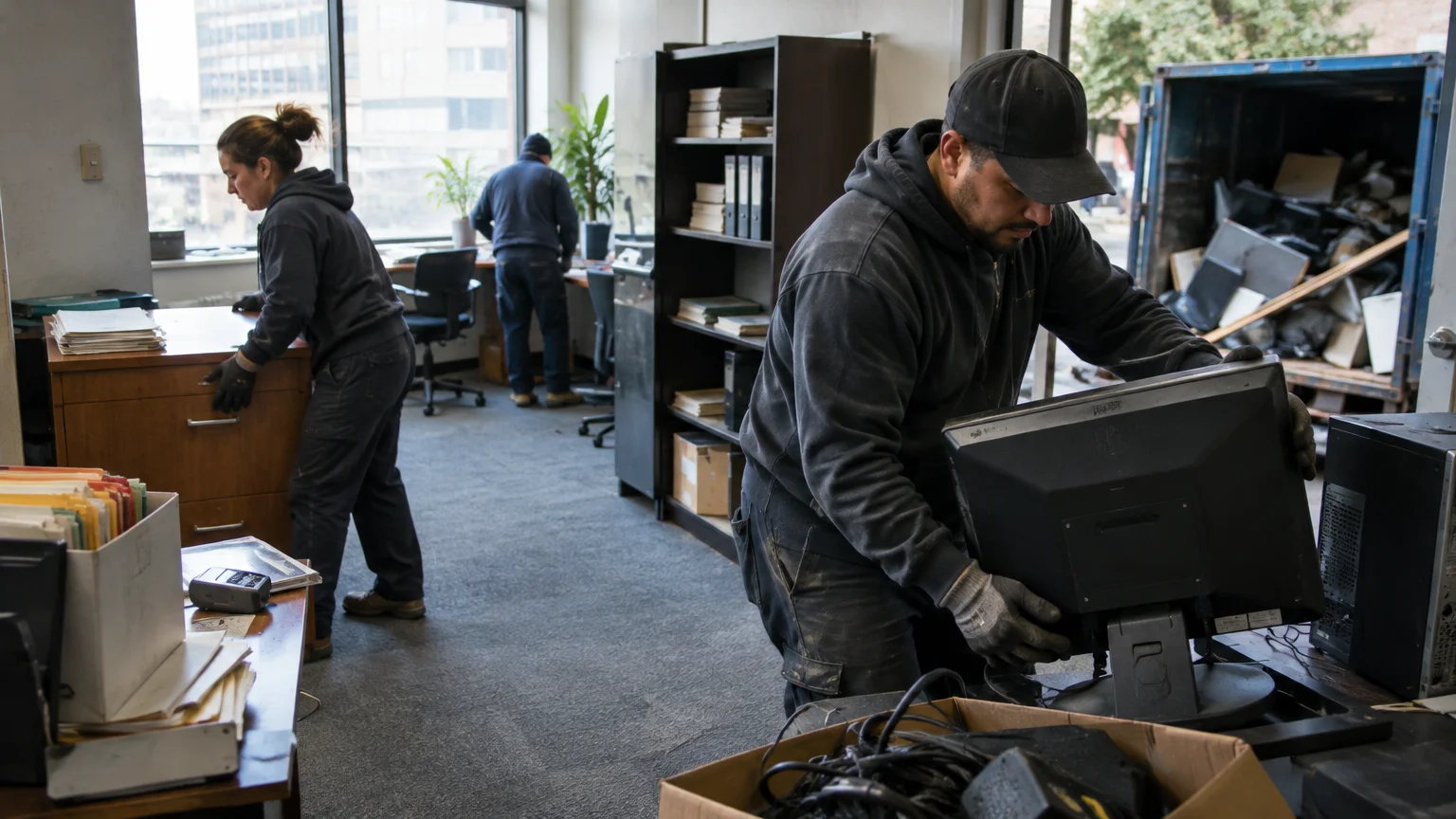
An office cleanout service sends workers to remove unwanted items from your workplace. The crew may sort, carry, load, and haul the material away. A dumpster rental leaves a container at the property, while your staff or workers handle most of the loading.
How each option works
With a cleanout, you show the crew what needs to go. Workers can move through offices, break rooms, storage rooms, and shared areas. This helps when you need the space cleared soon or have large items that are hard to move.
With a dumpster, you choose a safe place for the container. Staff, contractors, or building workers put the debris inside. The container stays for an agreed time, and the rental company removes it later. Rules may limit where it can sit and what materials it can hold.
A cleanout gives you more hands-on help. A dumpster gives you more control over the pace. Think about who will do the work and when the space must be ready.
Which types of businesses use each service
Office cleanouts help companies leaving a building, changing locations, or replacing old furniture. They also help property managers prepare an empty suite for a new tenant. Retail stores, medical offices, warehouses, and professional firms may all need this service.
Dumpsters fit projects that create debris over time. A contractor may use one during a remodel. A business owner may choose one when workers can load items safely during a planned closure. Conroe TX Junk Removal can help businesses review the job and compare the two options. Conroe businesses often need this support during moves, remodels, and lease changes.
Is an Office Cleanout Service Better for a Complete Workplace Reset?
An office cleanout service is often better for a full workplace reset because the crew handles the heavy work. It can remove many types of items during one planned visit. This can reduce staff strain and help the business reopen or turn over the space sooner.
What professional crews typically remove
A commercial crew may remove desks, chairs, tables, cubicles, shelves, filing cabinets, and small appliances. It may also handle boxes, carpet pieces, signs, display fixtures, and general office clutter. Before work starts, identify everything that must stay.
Some materials need separate handling. Computers, monitors, printers, and other electronics may need approved recycling or disposal. Keep confidential papers secure. Tell the crew about paint, chemicals, batteries, or other restricted waste before the job begins.
A cleanout service is a planned removal job for unwanted property contents. It does not always include deep cleaning or repairs. Ask whether sorting, loading, sweeping, recycling, and disposal are part of the work.
How labor, sorting, loading, and hauling are handled
The crew usually begins with a walk-through and a removal plan. Workers can separate items for reuse, recycling, donation, or disposal when those choices are available. They can also protect doors, walls, floors, and shared areas while moving large items.
This help matters when employees cannot safely lift heavy furniture. It also helps property managers who have no staff at an empty site. Conroe TX Junk Removal serves commercial customers in nearby areas who need organized removal. In Conroe, careful planning can help protect shared buildings and busy work sites.
Your business still has an important role. Someone must approve the items, protect records, and explain building rules. Clear labels and a basic room list can help prevent delays.
When Is Renting a Dumpster the Better Choice for Business Junk?
A dumpster may be the better choice when debris appears over several days and workers can load it safely. It may suit a renovation, fixture removal, or warehouse project with a steady stream of waste. The property must have enough room for delivery, access, and pickup.
Projects that generate debris gradually
Dumpsters work well when a business removes shelving, flooring, drywall, packaging, or other renovation debris in stages. Contractors can load the container as each area is finished. This keeps debris in one place instead of spreading it across the property.
A dumpster may also fit a planned move when the business has time to sort. Staff can add unwanted furniture and boxes as rooms are cleared. Workers should not overload the container or place restricted items inside it.
A dumpster may be less useful when the project includes many large objects. Furniture can fill a container quickly. A cleanout crew may load those items better and remove them without asking employees to do heavy work.
Site access, loading responsibilities, and rental timelines
Before renting a dumpster, check driveway width, overhead wires, gates, parking rules, and ground conditions. The container needs a firm placement area. Some properties also need approval from a landlord, city, or building manager.
The business usually must load the container. Workers should use safe lifting methods and keep people away from unstable piles. A contractor may handle this task, but everyone should understand the plan before delivery.
The rental period also matters. A late project may need a schedule change. A fast project may not need a container sitting on site. At a busy storefront or office entrance, placement can affect customers, tenants, and daily work.
How Do Office Cleanout Services and Dumpster Rentals Compare in Cost?
The total cost of either choice depends on the job. Key factors include the amount and type of material, labor, access, disposal needs, container size, project length, and urgency. The final cost is confirmed on a quote after the company reviews the work.
What affects the total cost of each option
A cleanout may need more labor because workers sort, carry, load, and haul items. Stairs, long halls, elevators, limited parking, and tight loading areas can add time. Large furniture and heavy equipment may also change the work plan.
A dumpster shifts more of the work to the business. The comparison may depend on container size, rental time, delivery access, and disposal rules. Extra labor may still be needed if staff cannot load materials safely.
Restricted materials may need separate handling under local or state rules. Describe these items before scheduling. Ask about prohibited materials, added time, and changes to the work scope before the job starts.
How labor, disposal, materials, and project scope change the comparison
A small office with easy access may be simple to load. A large office with many workstations, several floors, and a short deadline needs more planning. One choice may seem easier until you count worker time, safety needs, and business disruption.
The best comparison looks at the whole project. Consider who will move the items, where the waste will go, how long the work will take, and how the site will stay safe. Conroe TX Junk Removal can explain the factors that shape a commercial removal quote.
Which Option Handles Office Furniture, Electronics, and Special Items?
Both choices may handle common office junk, but a cleanout crew often gives more help with mixed loads. Furniture, electronics, records, and restricted materials may need different steps. Sort sensitive or regulated items before removal.
Desks, cubicles, chairs, and filing cabinets
Desks, chairs, cubicle panels, shelves, and filing cabinets can be hard to move through narrow doors. Crews may need to take some items apart before carrying them out. Building rules may also require elevator bookings or protection for shared halls.
A dumpster can hold some furniture, but large pieces use space quickly. Staff should break down items only when it is safe and allowed. Sharp edges, heavy drawers, and unstable stacks can cause injuries.
Before work begins, separate items for reuse. Mark everything that must remain in the building. A room-by-room list helps prevent accidental removal.
Electronics, confidential materials, and restricted waste
Electronics include computers, monitors, printers, phones, servers, and cables. Some contain parts that should not go into regular trash. Ask how these items will be handled, and keep records that must be retained.
Protect confidential papers before the crew arrives. A removal service may not include document shredding unless you arrange it. Follow your record policy and use a qualified document destruction provider when needed.
Paint, solvents, fluorescent lamps, batteries, medical materials, and chemicals may have special rules. Never place these items in a dumpster without approval. Tell the removal company about unusual waste early.
How Should You Choose Between an Office Cleanout and a Dumpster?
The best choice comes down to labor, timing, access, material type, and business disruption. A cleanout fits a fast reset with mixed items and limited staff. A dumpster fits a staged project when trained workers can load debris safely and the site can hold the container.
Questions about timeline, labor, access, and business disruption
Owners and property managers should ask these questions before deciding:
- Who will sort, lift, carry, and load the unwanted items?
- Does the site have safe room for a container and delivery truck?
- Does the project need one visit or several days of loading?
- Will customers, tenants, employees, or neighbors be affected?
- Do any items need special recycling, shredding, or disposal?
- Must the space be ready by a lease, move, or renovation deadline?
The answers often make the choice clear. A company without extra workers may benefit from a crew. A contractor with an active renovation may prefer a container near the work area.
A practical decision checklist for owners and property managers
Choose a cleanout service when the workplace has mixed items, heavy furniture, or clutter across several rooms. It is also a good fit when the business wants less disruption and needs the work finished on a planned date.
Choose a dumpster when debris will arrive in stages and trained workers can load it. Confirm the placement area, allowed materials, rental period, and building approval before delivery. Plan for weather, public access, and safe loading.
A property manager may use both choices on a large project. A crew can clear office furniture, while a dumpster supports a later renovation. Conroe TX Junk Removal can help property owners compare those needs before work starts.
What Should You Expect During a Commercial Office Cleanout?
A commercial office cleanout should begin with planning and end with a usable space. The process often includes a walk-through, item review, access planning, removal, hauling, and a final check. Good planning helps protect workers, tenants, customers, and the building.
Planning the removal around employees, tenants, and customers
Choose a work window that limits daily disruption. You may need to reserve elevators, notify tenants, move vehicles, or protect customer areas. Name one manager to answer questions and approve changes.
Before the crew arrives, employees should remove personal items and save important records. Label items that stay. Point out alarms, locked rooms, loading zones, and fragile finishes.
During removal, workers should keep walkways clear and use safe lifting methods. Doors, floors, and walls may need protection. The plan should change if the crew finds unsafe materials or items outside the agreed work.
Preparing the space for reuse, renovation, or turnover
After removal, the manager should check each room. This confirms that furniture, boxes, and debris are gone. It can also show whether cleaning, repairs, painting, or recycling tasks remain.
A cleared office may become a new workspace, storage area, retail floor, or rental suite. The next step depends on the property plan. Removal crews usually focus on unwanted items, so arrange deep cleaning or construction work separately when needed.
Key takeaways
- An office cleanout includes hands-on removal, loading, and hauling.
- A dumpster suits projects that create debris over several days.
- Furniture, electronics, records, and restricted waste need separate planning.
- Access, labor, timing, and disposal needs shape the final quote.
- The safest choice fits the site and the staff available.
In closing, office cleanout vs dumpster rental is not the same choice for every business. A cleanout crew can simplify a fast workplace reset. A dumpster can support a staged project with safe loading space. Contact us to plan a commercial office cleanout that fits a Conroe property and schedule.
Frequently Asked Questions
What is a cleanout service?
A cleanout service removes unwanted items from a home, office, store, or other property. For a business, this may include desks, chairs, cubicles, boxes, fixtures, and general clutter. Confirm whether sorting, loading, sweeping, recycling, and special disposal are included.
Can a business put office furniture in a dumpster?
Some office furniture may fit in a dumpster, but large items can fill it quickly. The business must follow rules for weight, size, and allowed materials. Electronics, chemicals, and confidential papers may need separate handling instead of regular disposal.
Who takes old office electronics?
A commercial removal company, electronics recycler, or approved waste provider may take old office electronics. The best choice depends on the equipment and local rules. Before removal, protect data, remove access codes, and confirm how computers, servers, printers, and monitors will be handled.
Is a dumpster better for an office move?
A dumpster may work for an office move when staff or contractors can load unwanted items over several days. An office cleanout crew may be better when heavy furniture must be removed quickly. The choice depends on labor, access, item volume, and the move deadline.
What should a business do with confidential papers?
Confidential papers should be separated from ordinary office junk. Follow your record retention policy and use secure document destruction when needed. Do not give sensitive documents to a cleanout crew unless the service and handling process are confirmed first.
Related office cleanout FAQs, house cleanout FAQs, cleanouts, and estate cleanouts can involve many of the same planning needs. When you are unsure about an item or removal plan, review the job before work begins so the project does not become harder later.
If you are not sure what you are dealing with, it is worth having someone look at it before it turns into a bigger job. Get in touch with Conroe TX Junk Removal today and we will tell you where you stand.